 (325) 229-8020
  info@plumberabilene.com
  Request Service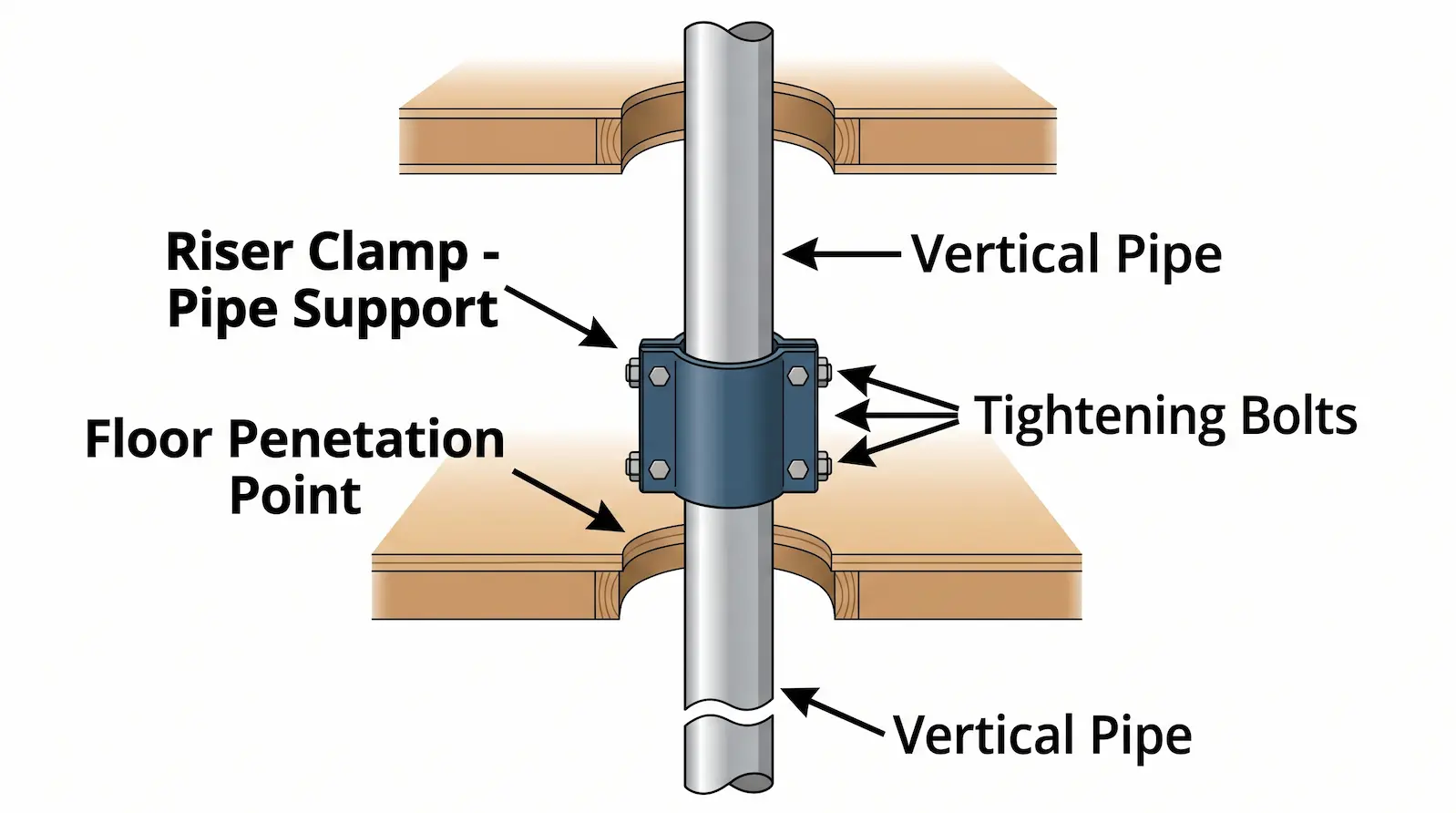
When most homeowners think about plumbing, they picture leaking faucets, clogged drains, or maybe a broken water heater. But behind every reliable plumbing system is something less noticeable that matters just as much — proper pipe support.
That’s where riser clamps come in.
If you’ve ever looked inside a basement, utility room, or commercial building and noticed metal rings holding vertical pipes in place, you were probably looking at riser clamps. They may seem like small hardware pieces, but they play a huge role in keeping plumbing systems stable and safe.
Learning how to use riser clamps plumbing systems properly can help prevent pipe movement, reduce stress on joints, and extend the life of your plumbing. Whether you’re tackling a DIY project or simply trying to understand your home’s plumbing better, knowing the basics can save you time, money, and frustration later.
At Plumber Abilene TX, we often meet homeowners who are surprised to learn how important proper pipe support really is. A loose vertical pipe may not seem serious at first, but over time it can lead to noise, leaks, or even structural damage.
Now let’s break it down in simple terms so you can understand exactly how riser clamps work and how to use them correctly.
A Quick Story About a “Small” Plumbing Problem
A homeowner in Abilene once called us because they kept hearing a loud banging noise inside the wall every time someone used the upstairs bathroom. At first, they thought the issue was water pressure or maybe old pipes.
But after opening a small section of drywall, the real problem became obvious.
The vertical pipe running between floors had almost no support. Every time water moved through the line, the pipe shifted slightly. Over months and years, that movement loosened fittings and created noise inside the wall.
The fix itself was surprisingly simple.
We installed properly sized riser clamps to stabilize the vertical pipe and secure the weight load correctly between floors. The banging stopped almost immediately.
What stood out most was the homeowner’s reaction. They said, “I had no idea such a small metal clamp could matter this much.”
Honestly, that’s common.
Many people don’t realize plumbing systems expand, vibrate, and shift over time. Without the right supports, even well-installed pipes can eventually develop problems.
That’s why understanding the basics of riser clamps is so valuable for homeowners and DIY beginners.
What Is a Riser Clamp in Plumbing?
A riser clamp is a metal support device designed to hold vertical plumbing pipes securely in place. These clamps are commonly installed around pipes that run between floors in homes, apartment buildings, and commercial structures.
Their main purpose is simple: support the pipe’s weight and prevent movement.
Most riser clamps are made from steel, copper-plated steel, or galvanized metal. They typically consist of two semicircular pieces fastened together around the pipe with bolts.
You’ll often find them supporting:
- Water supply lines
- Drain pipes
- Copper pipes
- Steel pipes
- PVC vertical stacks
- Multi-floor plumbing systems
In many buildings, riser clamps are installed at floor penetrations where pipes travel vertically through framing or concrete.
Without proper support, vertical pipes can:
- Sag over time
- Shift during water flow
- Stress joints and fittings
- Create loud noises
- Increase leak risk
That’s why riser clamps are considered an essential part of safe plumbing installation.
Why Proper Pipe Support Matters
Here’s the thing many beginners don’t realize.
Pipes are heavier than they look.
Once water fills the system, the total weight increases significantly. Vertical pipes especially create downward force because gravity constantly pulls on them.
Proper support helps distribute that load safely.
According to general building and plumbing standards, unsupported pipes can place excessive stress on joints and fittings over time. This can eventually lead to leaks, cracks, or premature wear. International Association of Plumbing and Mechanical Officials (IAPMO)
Common Problems Caused by Poor Pipe Support
Pipe Movement
When pipes move inside walls or ceilings, connections weaken over time.
Water Hammer Noise
Loose pipes can bang loudly when water pressure changes suddenly.
Joint Damage
Heavy vertical loads can pull on fittings and weaken seals.
Vibration
Pipes carrying flowing water naturally vibrate slightly. Clamps help reduce excess motion.
Structural Stress
Unsupported plumbing can eventually affect framing or drywall around the pipe path.
In simple words, riser clamps help keep everything stable and secure.
What Abilene TX Homeowners Should Know About Pipe Support
Homes in Abilene TX vary widely in age and construction style. Older neighborhoods near downtown Abilene and surrounding areas like Tye and Clyde often have plumbing systems installed decades ago — many with outdated or missing pipe supports.
In these older homes, riser clamps may have rusted, loosened, or were never properly installed in the first place. Over time, Texas temperature swings also cause pipes to expand and contract more than homeowners realize. Summer heat and winter cold cycles put extra stress on vertical plumbing systems throughout Taylor and Callahan County.
Newer construction in areas like Wylie and northeast Abilene generally follows modern plumbing codes, but DIY renovations and additions sometimes skip proper pipe support steps entirely.
If your Abilene home is more than 20 years old, it may be worth having a professional inspect your vertical pipe supports — especially in basements, utility rooms, and between floors.
Types of Riser Clamps Used in Plumbing
Not all riser clamps are exactly the same. Choosing the right one depends on the pipe material, size, and installation location.
Steel Riser Clamps
These are among the most common options for commercial and residential plumbing systems.
They’re durable, strong, and ideal for supporting heavy vertical pipes.
Copper-Plated Clamps
These are typically used with copper pipes to reduce corrosion concerns and maintain compatibility between metals.
Adjustable Riser Clamps
Some models include adjustable sizing features for flexibility during installation.
PVC Pipe Support Clamps
Plastic plumbing systems often use lighter support systems designed specifically for PVC or CPVC pipes.
How to Use Riser Clamps Plumbing Systems Correctly
Now let’s get into the practical part.
If you want to learn how to use riser clamps plumbing installations correctly, the process is actually fairly straightforward when broken into steps.
Step 1: Identify the Vertical Pipe
First, locate the vertical pipe section that needs support.
This is usually:
- Between floors
- Inside utility walls
- Near basement ceilings
- Around vertical drain stacks
Look for long pipe runs carrying significant weight.
Step 2: Choose the Correct Clamp Size
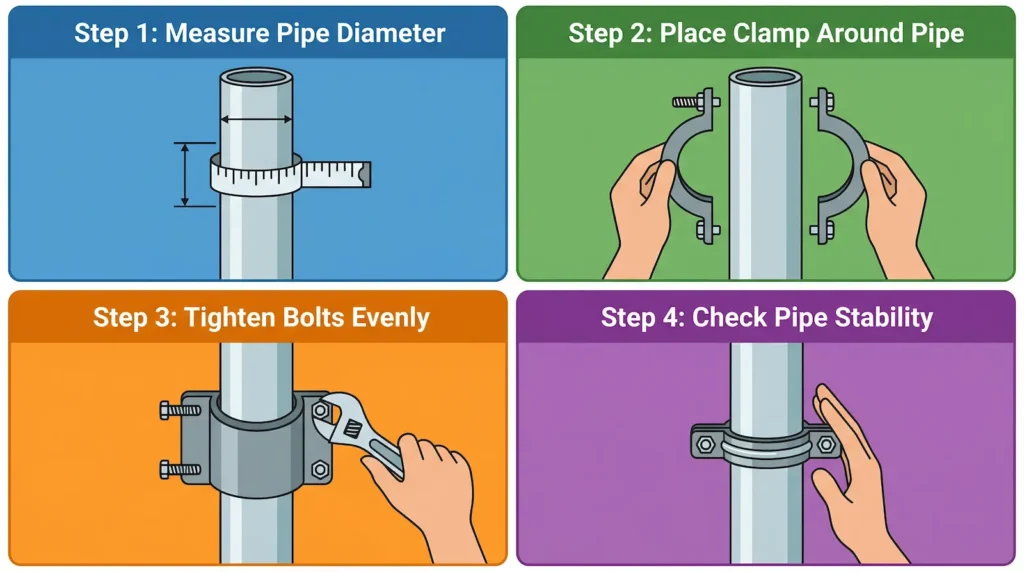
The clamp must match the outside diameter of the pipe.
A clamp that’s too loose won’t support properly. One that’s too tight can damage the pipe.
Most riser clamps are labeled clearly by pipe size.
Always double-check measurements before installation.
Step 3: Select the Right Installation Point
Riser clamps are often installed where the pipe passes through a floor level because this allows the structure itself to help support the load.
This positioning helps transfer pipe weight safely to the building framing.
In multi-story systems, multiple support points may be needed.
Step 4: Secure the Clamp Around the Pipe
Open the clamp and place both halves around the pipe.
Then:
- Align the clamp evenly
- Insert the bolts
- Tighten gradually
- Avoid overtightening
The goal is firm support without crushing or stressing the pipe material.
Step 5: Anchor the Clamp Properly
Some riser clamp systems rest directly on floor framing or structural supports.
Others may require threaded rods or additional brackets.
Always ensure the support point itself is stable enough to carry the pipe load.
Step 6: Check for Pipe Movement
After installation, gently test the pipe.
A properly installed riser clamp should reduce excessive movement while still allowing minimal natural expansion and contraction.
That balance matters more than many people realize.
Common Mistakes DIY Beginners Make
Even simple plumbing support systems can create issues if installed incorrectly.
Here are the most common mistakes we see.
Using the Wrong Clamp Size
This happens constantly in DIY projects.
Improper sizing leads to weak support or pipe damage.
Installing Too Few Supports
Long vertical runs may require multiple clamps depending on height and pipe material.
Overtightening the Clamp
Too much pressure can deform copper or PVC piping.
Ignoring Building Codes
Different regions may have specific plumbing support requirements.
Always check local codes before major plumbing work.
Supporting Pipes Improperly
The clamp itself is only part of the system. The surrounding framing or structure must also handle the load safely.
Best Practices for Safe Riser Clamp Installation
If you want professional-looking results, these practical tips make a big difference.
Use Corrosion-Resistant Materials
Especially in humid spaces like basements or utility rooms.
Match Metals Carefully
Different metals can react over time and cause corrosion.
Allow for Expansion
Pipes naturally expand and contract with temperature changes.
Inspect Older Supports
Older homes sometimes contain rusted or loose supports that need replacement.
Follow Manufacturer Guidelines
Different clamp systems may include specific installation instructions.
Riser Clamps and Texas Climate Conditions
One thing that makes plumbing support especially important in Abilene TX is the local climate.
West Texas experiences significant temperature swings throughout the year. Summer temperatures regularly climb above 100°F, while winter months can bring freezing conditions that affect pipes throughout the home.
These temperature changes cause pipes to expand when hot and contract when cold. Over years of repeated cycles, this natural movement puts real stress on fittings, joints, and support hardware.
Here’s what Abilene homeowners should watch for:
- Loose clamps after extreme temperature seasons
- Rust or corrosion on older metal supports in humid utility spaces
- Cracked PVC near support points where clamps may be too tight
- Increased pipe noise during seasonal temperature changes
- Visible pipe movement in exposed basement or utility room areas
Inspecting your pipe supports once a year — especially after a harsh Texas summer or winter — is a simple habit that can prevent expensive repairs later.
If you notice any of these warning signs in your Abilene home, it’s worth having a licensed plumber take a look before small issues become bigger problems.
Expert Tip: Don’t Ignore Plumbing Noises
Many homeowners assume pipe noises are normal.
Sometimes they are.
But persistent banging, rattling, or vibration often points to support issues. Proper riser clamp placement can dramatically reduce these problems before they become expensive repairs.
At Plumber Abilene TX, we frequently inspect homes where a simple support upgrade prevents future leaks and pipe damage.
Small preventive fixes today can save major repair costs later.
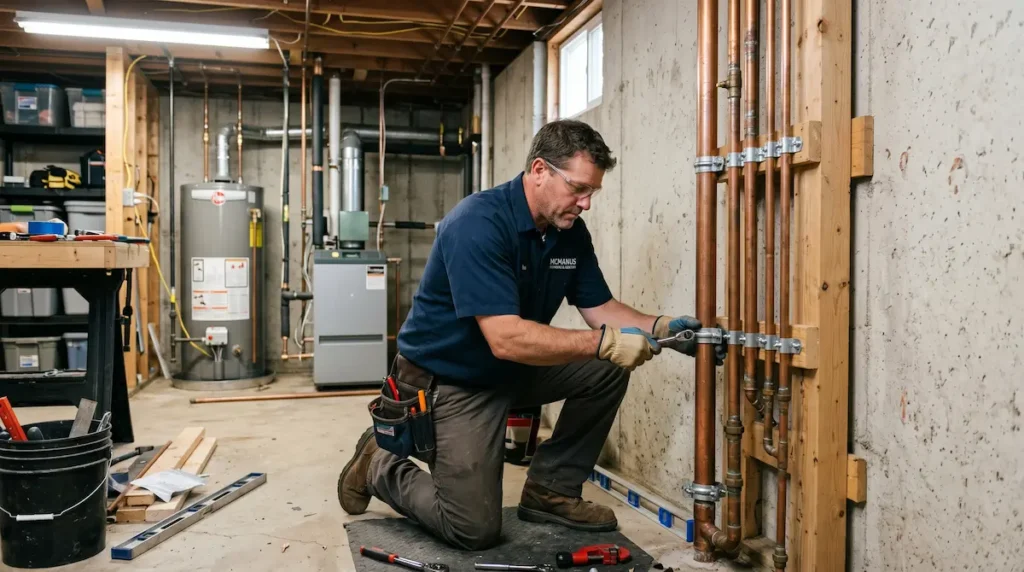
Real-World Example: Basement Pipe Stabilization
One homeowner recently renovated their basement and noticed exposed plumbing pipes shifting whenever upstairs fixtures were used.
The pipes weren’t leaking yet, but movement was clearly visible.
After evaluating the system, we found several missing vertical supports along the main water supply line.
We installed properly spaced riser clamps near the floor penetrations and added additional support brackets where needed.
The difference was immediate.
Pipe vibration decreased, noise disappeared, and the plumbing system felt noticeably more stable overall.
It wasn’t a flashy repair. But it solved a problem that could have become much more expensive later.
That’s often how plumbing works. The little details matter.
How Riser Clamps Improve Long-Term Plumbing Performance
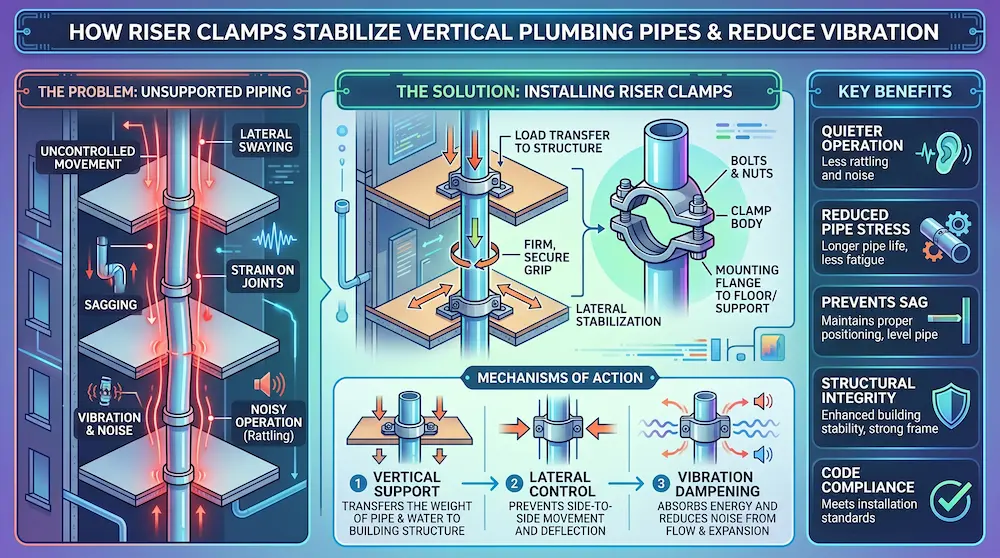
When installed correctly, riser clamps do more than simply “hold pipes.”
They help protect the entire plumbing system.
Better Stability
Pipes remain aligned properly over time.
Reduced Joint Stress
Fittings and connections experience less movement.
Longer Pipe Life
Less vibration means reduced wear.
Lower Leak Risk
Stable pipes are less likely to develop loose joints.
Quieter Plumbing
Proper support reduces banging and rattling sounds.
These benefits become especially important in multi-story homes and larger plumbing systems.
When to Call a Professional Plumber
DIY support installation can work for simple situations.
But there are times when professional help makes sense.
Consider contacting a plumber if:
- Pipes are already leaking
- Structural framing is involved
- You’re unsure about code requirements
- Multiple floors are affected
- Pipe movement is severe
- Corrosion is visible
Professional plumbers understand load distribution, support spacing, and local building requirements that homeowners may overlook.
For homeowners in Texas, Plumber Abilene TX provides plumbing inspections, pipe support corrections, leak repair, and full plumbing system evaluations.
Plumbing Support Problems We See in Abilene TX
Loose pipes and missing supports are among the most common issues our team finds during routine plumbing inspections across Abilene and surrounding communities.
In many cases, homeowners don’t realize there’s a support problem until they notice noise, vibration, or an unexplained leak. By that point, fittings may already be stressed or slightly damaged.
If you’re hearing banging or rattling inside your walls, our leak detection Abilene service can help identify whether loose pipes or hidden leaks are causing the problem.
For urgent situations where pipes are already moving or leaking, our emergency plumber Abilene team is available 24/7 and responds fast.
Homeowners planning renovations or basement finishing projects can also benefit from a full plumbing inspection through our residential plumber Abilene service before walls are closed up.
Key Takeaways
Understanding how to use riser clamps plumbing systems correctly can make a surprisingly big difference in your home’s plumbing performance.
These simple support devices help:
- Stabilize vertical pipes
- Reduce vibration
- Prevent joint stress
- Minimize noise
- Extend plumbing system life
For DIY beginners, learning proper pipe support basics is one of the smartest ways to understand how plumbing systems actually function behind walls and ceilings.
And remember — plumbing problems often start small.
A loose pipe today can eventually become tomorrow’s expensive repair.
Frequently Asked Questions About How to Use Riser Clamps Plumbing
What does a riser clamp do in plumbing?
A riser clamp supports vertical plumbing pipes and helps distribute the pipe’s weight safely. It prevents excessive movement, vibration, and stress on fittings.
Where should riser clamps be installed?
They’re commonly installed at floor penetrations where vertical pipes pass between levels. This allows the building structure to help carry the load.
Can riser clamps be used on PVC pipes?
Yes, but you should use clamps designed for PVC or plastic piping systems. Overtightening standard metal clamps can damage plastic pipes.
How tight should a riser clamp be?
The clamp should hold the pipe securely without crushing or deforming it. Tighten evenly and avoid excessive force.
How many riser clamps does a vertical pipe need?
That depends on pipe size, material, and height. Longer vertical runs often require multiple support points to meet plumbing code standards.
Do riser clamps reduce pipe noise?
Yes. Properly supported pipes move less during water flow, which helps reduce banging, rattling, and vibration sounds.
Are riser clamps required by plumbing code?
In many situations, yes. Plumbing codes often require proper support for vertical piping systems to ensure safety and long-term stability.
Should homeowners install riser clamps themselves?
Simple installations may be manageable for experienced DIYers. However, complex systems or code-related concerns are best handled by licensed plumbers.
Conclusion
Understanding how to use riser clamps in plumbing correctly is one of those small things that makes a surprisingly big difference in your home’s long-term performance.
Riser clamps aren’t glamorous. You won’t find them featured in home improvement magazines. But behind every quiet, stable, leak-free plumbing system, proper pipe support is almost always part of the story.
For homeowners in Abilene TX, this knowledge becomes even more valuable given the mix of older and newer homes across the area. Whether your home was built in the 1960s with galvanized steel pipes or recently renovated with modern PVC systems, vertical pipe support affects how well everything holds together over time.
Most basic riser clamp installations are manageable for experienced DIYers when the situation is straightforward. But plumbing has a way of revealing surprises once you start looking.
If you discover missing supports, corroded clamps, or pipes that are already moving or making noise, don’t wait for the problem to get worse.
At Plumber Abilene TX, we help homeowners across Abilene and surrounding communities — including Tye, Tuscola, Clyde, Merkel, and Buffalo Gap — with everything from simple pipe support repairs to full plumbing system inspections.Call us anytime at +1 (325) 229-8020 — we’re available 24/7 and always happy to help.