 (325) 229-8020
  info@plumberabilene.com
  Request Service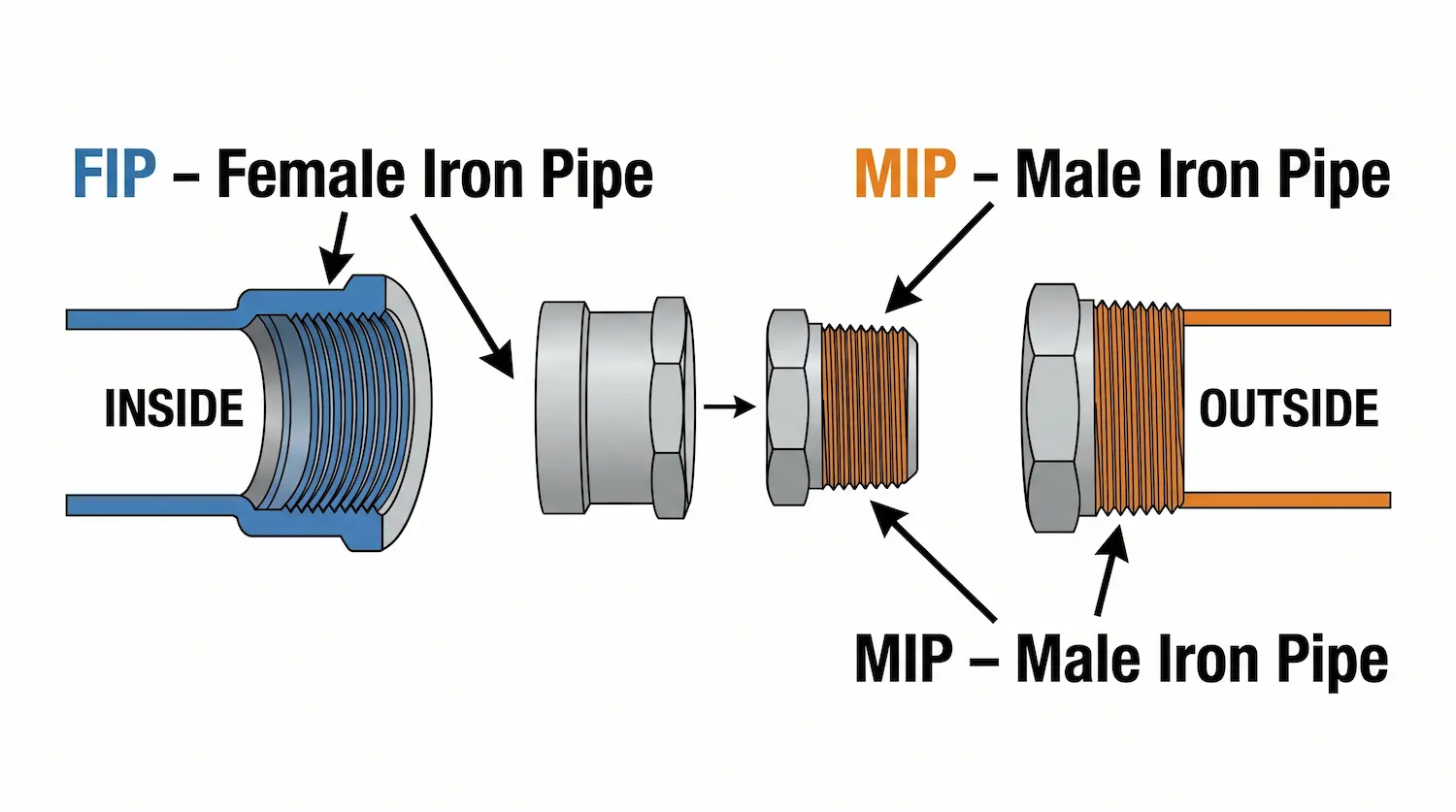
Plumbing labels can feel like a secret code.
FIP. MIP. NPT. PVC.
If you’ve ever stood in a hardware store aisle staring at pipe fittings and had absolutely no idea which one to grab — you’re in good company.
Most homeowners in Abilene TX only think about plumbing when something goes wrong. A dripping faucet. A slow drain. A shutoff valve that won’t budge. And in those moments, picking the wrong fitting can turn a 20-minute repair into a full afternoon of frustration.
So let’s make it simple.
In this guide, you’ll learn exactly what FIP means in plumbing, how it works, where you’ll find it in your home, and how to avoid the mistakes that send most DIYers back to the store twice.
A Quick Story Most DIY Homeowners Can Relate To
A homeowner in Abilene once decided to replace an old kitchen faucet on a Saturday afternoon. It looked simple enough on YouTube.
He shut off the water, removed the old supply line, and drove to the hardware store for a replacement fitting. The old connector had “1/2-inch FIP” stamped on the side, but he ignored it because he figured “a pipe fitting is a pipe fitting.”
Two hours later, he was back at the store again.
The fitting he bought wouldn’t connect properly. The threads looked close, but they wouldn’t tighten correctly. Frustrated and tired, he eventually asked a store employee for help and learned the difference between FIP and MIP threads.
That small detail changed everything.
Within minutes, he had the right part, installed it correctly, and avoided a slow leak that could have damaged the cabinet below.
Here’s the thing: plumbing repairs often come down to understanding a few basic terms. Once you know what FIP means, shopping for fittings becomes much easier.
What Is an FIP Fitting?
An FIP fitting is a female-threaded plumbing connection. The inside of the fitting contains threads designed to receive a male-threaded pipe or connector.
Think of it like a bottle and cap:
- The bottle opening has threads on the inside
- The cap has threads on the outside
That’s essentially how FIP and MIP work together.
Breaking Down the Name
- F = Female
- IP = Iron Pipe
So, FIP literally means “Female Iron Pipe.”
Despite the old-school name, these fittings are not limited to iron pipes anymore. Today, they’re commonly made from:
- Brass
- PVC
- Copper
- Galvanized steel
- Stainless steel
Most modern plumbing systems still use the same thread terminology because the standards have remained consistent over time. Organizations like American Society of Mechanical Engineers help standardize many plumbing thread specifications used across the industry.
How FIP Threads Work
FIP fittings are internally threaded. That means the grooves are inside the fitting rather than outside.
The fitting connects to an MIP fitting, which stands for Male Iron Pipe.
Here’s the basic relationship:
| Thread Type | Description |
| FIP | Female threads inside the fitting |
| MIP | Male threads outside the fitting |
When you screw them together, the threads create a secure connection.
Most residential plumbing fittings in the United States use a thread style called NPT (National Pipe Thread), which creates a tight seal as the threads taper together.
Where You’ll Commonly Find FIP Fittings
FIP fittings are everywhere in residential plumbing. Once you know what to look for, you’ll start noticing them throughout your home.
Under Kitchen and Bathroom Sinks
Supply lines often connect using FIP threads. Faucet connectors and shutoff valves commonly use this style because it creates a secure threaded connection.
Water Heaters
Many water heater connections use FIP fittings for hot and cold water lines.
Shower Arms
The pipe coming from the wall often threads into an FIP fitting hidden behind the shower trim.
Outdoor Hose Connections
Some outdoor plumbing fixtures and adapters include FIP connections for threaded compatibility.
Toilet Supply Lines
Certain toilet shutoff valves and connectors also use FIP threads.
What Abilene Homeowners Should Know About Their Plumbing
Homes in Abilene TX vary widely in age and plumbing style. Older neighborhoods near downtown Abilene often have galvanized steel pipes with traditional threaded fittings — including FIP connections that have been in place for decades.
Newer construction in areas like Wylie and northeast Abilene more commonly uses PEX tubing with brass fittings, but FIP connections still appear at shutoff valves, water heaters, and faucet supply lines throughout these homes.
Understanding which fitting type you have makes repairs faster and less stressful. And when repairs go beyond basic DIY, our team at Plumber Abilene TX is familiar with every type of plumbing system found across Taylor and Callahan County.
Why Understanding FIP Matters for DIY Repairs
Many plumbing leaks happen because homeowners accidentally mix incompatible fittings.
The threads may look similar at first glance, but even slight differences can prevent a proper seal.
Understanding FIP can help you:
- Buy the correct replacement parts
- Avoid stripped threads
- Prevent water leaks
- Save time during repairs
- Reduce unnecessary trips to the hardware store
It also makes reading plumbing labels much easier.
Instead of guessing, you’ll immediately know whether a fitting receives threads or inserts into another connector.
Common Mistakes Homeowners Make With FIP Fittings
Even simple plumbing repairs can go sideways if fittings are installed incorrectly.
Here are some of the most common problems people run into.
Overtightening the Threads
This is probably the biggest mistake.
People often think tighter automatically means better. But overtightening can crack fittings, especially plastic PVC connectors.
A snug fit plus proper thread seal tape is usually enough.
Using the Wrong Thread Tape
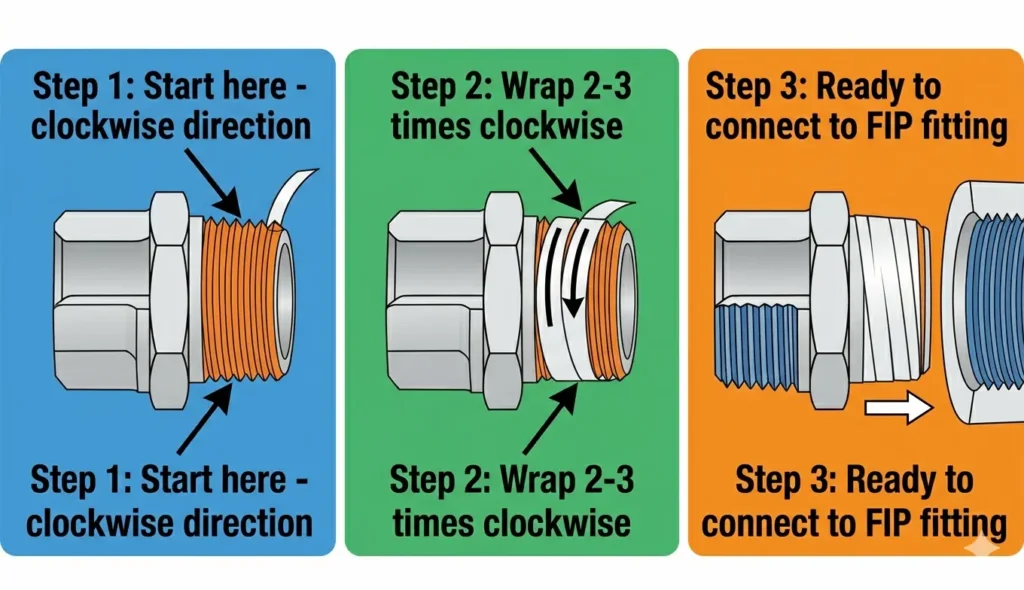
Thread seal tape — commonly called Teflon tape — helps create a watertight seal.
Wrap it clockwise around the male threads before connecting the fitting.
Too much tape can actually interfere with sealing.
Mixing Different Thread Types
Not all plumbing threads are identical.
FIP and compression fittings are completely different systems. Forcing mismatched parts together can damage both fittings.
Ignoring Small Leaks
A tiny drip may not seem serious at first.
But slow leaks under sinks often lead to cabinet swelling, mold growth, and water damage over time.
When a Small Fitting Problem Becomes a Bigger Issue
Sometimes what looks like a simple fitting replacement turns out to be a sign of a larger problem. Corroded threads, mineral buildup, or aging pipes can make even basic repairs more complicated than expected.
If you notice signs of moisture, rust staining, or recurring leaks around threaded connections in your home, it may be worth having a professional take a look. Our leak detection Abilene service helps homeowners identify hidden problems before they cause serious water damage.
For urgent situations, our emergency plumber Abilene team is available 24/7 to help when plumbing problems can’t wait.
FIP vs MIP: What’s the Difference?
This is one of the most searched plumbing questions online.
The easiest way to remember it is this:
- FIP receives the connection
- MIP inserts into the connection
You can usually identify them visually.
FIP
- Threads are inside
- Opening appears smooth from the outside
- Designed to accept male threads
MIP
- Threads are outside
- Looks visibly ridged
- Screws into female fittings
They’re designed to work together as matching components.
Materials Used in FIP Fittings
Different plumbing jobs require different fitting materials.
Brass FIP Fittings
Brass is durable and corrosion-resistant. It’s commonly used for water supply connections.
PVC FIP Fittings
PVC fittings are lightweight and affordable. These are common in irrigation systems and some drain applications.
Stainless Steel Fittings
These are often used where extra durability or corrosion resistance matters.
Galvanized Steel
Older homes may still have galvanized threaded fittings installed decades ago.
The right material depends on pressure, water quality, and application type.
How to Identify the Correct FIP Size
Plumbing sizing can feel confusing because the actual measurements don’t always match the label.
For example, a “1/2-inch” fitting does not literally measure half an inch across the threads.
The best approach is to:
- Bring the old fitting to the store
- Use a thread gauge if available
- Check manufacturer labels
- Compare both thread diameter and thread spacing
Most homeowners deal with:
- 1/2-inch fittings
- 3/4-inch fittings
Those are common for faucets, toilets, and household water lines.
Best Practices for Installing FIP Fittings
Good installation habits make a huge difference.
Clean the Threads First
Dirt or old sealant can prevent a proper seal.
Use Thread Seal Tape Correctly
Wrap clockwise 2–3 times around male threads only.
Hand Tighten First
Always start threading by hand to avoid cross-threading.
Avoid Excess Force
Use a wrench for final tightening, but don’t crank excessively hard.
Test Slowly
Turn the water back on gradually and inspect for leaks.
These simple habits can save homeowners a lot of frustration.
Expert Tip: Don’t Force Plumbing Connections
Professional plumbers learn this lesson early.
If a fitting doesn’t thread smoothly after a couple turns, something is probably wrong.
Forcing the connection may:
- Damage threads
- Crack fittings
- Create hidden leaks
- Cause expensive repairs later
In many cases, the problem is simply using MIP where FIP is required — or vice versa.
Organizations like International Association of Plumbing and Mechanical Officials emphasize proper fitting compatibility and installation standards throughout the plumbing industry.
Real-World Example: A Small Leak That Became Expensive
One homeowner noticed a tiny drip under the bathroom sink after replacing a shutoff valve.
It seemed harmless, so he placed a towel underneath and planned to fix it later.
A month passed.
The slow leak warped the vanity floor, damaged stored cleaning supplies, and eventually caused mold growth behind the cabinet.
The repair ended up costing far more than the original plumbing part.
That’s why proper fitting selection matters so much during DIY repairs.
A correctly installed FIP connection should create a reliable, long-lasting seal.
Summary: What Homeowners Should Remember About FIP
By now, the term probably feels much less intimidating.
Here’s the simple takeaway:
- FIP means Female Iron Pipe
- It describes internally threaded plumbing fittings
- FIP connects to MIP fittings
- These fittings are common in household plumbing
- Correct sizing and installation help prevent leaks
Once you understand the basics, shopping for plumbing parts becomes far less confusing.
And honestly, that confidence makes DIY repairs much less stressful.
Frequently Asked Questions About What Does FIP Mean in Plumbing
Is FIP the same as female threaded?
Yes, in most residential plumbing situations, FIP refers to a female-threaded connection designed to accept male threads.
What does MIP mean in plumbing?
MIP stands for Male Iron Pipe. These fittings have external threads that screw into FIP connections.
Are FIP and NPT the same thing?
Not exactly. FIP describes the fitting style, while NPT refers to the thread standard commonly used in plumbing systems.
Can brass and PVC FIP fittings connect together?
Yes, they often can if the thread sizes and standards match correctly.
Do I need Teflon tape on FIP fittings?
You typically apply thread seal tape to the male threads before connecting to the FIP fitting.
Why does my FIP fitting leak?
Leaks are usually caused by cross-threading, overtightening, damaged threads, or improper sealing.
Are FIP fittings used in modern homes?
Absolutely. FIP connections remain very common in residential plumbing systems today.
Can homeowners replace FIP fittings themselves?
Many basic repairs are DIY-friendly if you use the correct parts and installation methods.
FIP Fittings and Hard Water in Abilene TX
One thing many Abilene homeowners deal with is hard water. The water supply in this region contains higher levels of minerals like calcium and magnesium, which can affect plumbing fittings over time.
Hard water buildup inside FIP threads can make connections difficult to loosen during repairs. In some cases, mineral deposits cause slow leaks that are easy to overlook until real damage has already occurred.
Here’s what helps:
- Inspect threaded connections annually, especially near water heaters and under sinks
- Look for white or yellowish mineral crust around fittings as an early warning sign
- Use quality thread seal tape during any fitting replacement to create a reliable barrier
- Consider a water softener if you notice frequent buildup on fixtures throughout your home
If mineral deposits have already caused damage to your fittings or pipes, our residential plumber Abilene team can assess the situation and recommend the right solution.
Conclusion
Understanding what FIP means in plumbing is one of those small things that makes a real difference.
It helps you shop smarter, install fittings correctly, and avoid the frustrating cycle of buying the wrong part and starting over.
For homeowners in Abilene TX, that knowledge becomes even more useful given the mix of older and newer plumbing systems found throughout the area. Whether your home was built in the 1970s with galvanized steel pipes or in the last decade with modern PEX lines, FIP connections are almost certainly part of your plumbing system somewhere.
Most basic FIP fitting replacements are manageable as DIY repairs when you have the right parts and take your time. But plumbing has a way of surprising people.
If a repair starts feeling more complicated than expected, or if you discover something unexpected behind the wall or under the sink, don’t hesitate to call in help.
At Plumber Abilene TX, we handle everything from simple fitting replacements to full plumbing repairs across Abilene and surrounding communities including Tye, Tuscola, Clyde, Merkel, and Buffalo Gap.Call us anytime at +1 (325) 229-8020 — we’re available 24/7 and always happy to help.